Consumer Resource Center
Understanding Fuel Prices
From the Refinery to the Pump
Have you ever wondered why gasoline and diesel prices change? The price you pay at the pump is influenced by several factors, many of which occur long before fuel reaches your local gas station/convenience store.
The Indiana Food & Fuel Association (IFFA) created this resource to help consumers better understand how fuel gets from the refinery to the pump, what determines fuel prices, and why those prices can change.
The Four Main Components of Fuel Prices
The price you pay at the pump is made up of four main components:

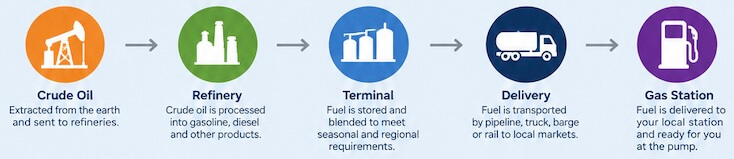
How Fuel Gets to Your Local Gas Station/Convenience Store
Fuel moves through several stages before reaching the pump, each involving transportation, equipment, people and operating costs.
Why Do Gas Prices Change?
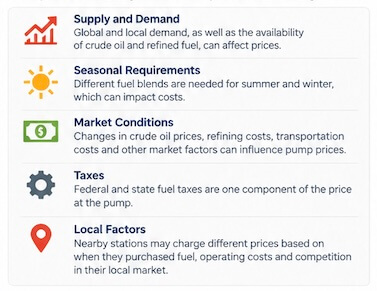
Fuel prices can change due to many factors, including:
|
Supply and Demand |
|
|
Seasonal Requirements |
|
|
Market Conditions |
|
|
Taxes |
|
|
Local Factors |